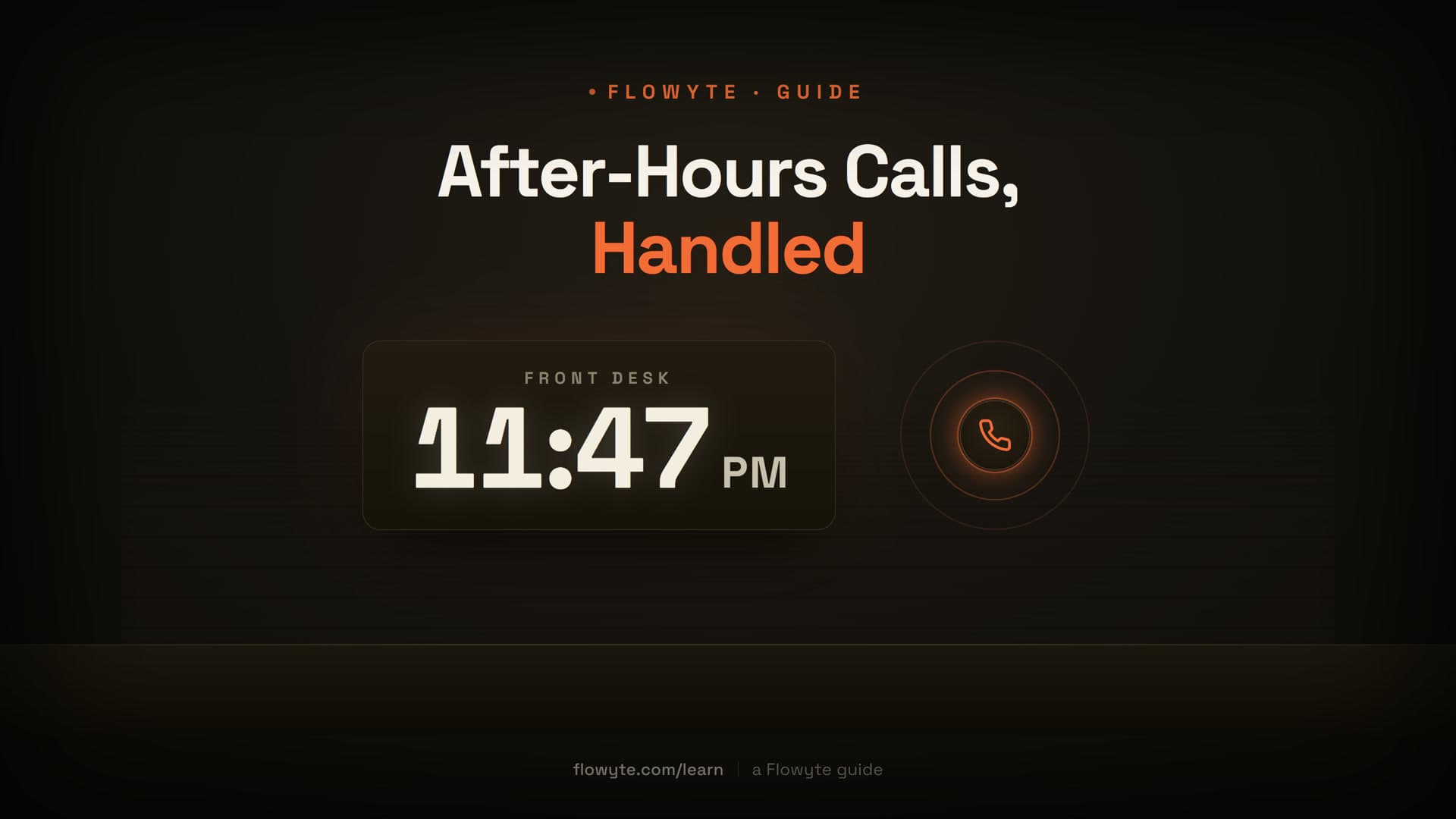
An HVAC answering service is a phone agent that answers your heating-and-air company's calls, books the routine work like tune-ups and diagnostics, and routes true after-hours emergencies to your on-call technician — around the clock, without a human at the desk. The video below is that service in action: one AI agent, built by describing the shop in plain English, working a full day of calls and the night after — a daytime tune-up booking, and an 11 PM gas-smell safety call handled the way it should be.
Key Takeaways
- One agent runs the whole phone for a heating-and-air company, built by describing the shop in plain English rather than wired together by hand.
- On a daytime tune-up call the agent won't guess a price on the phone — the owner's rule is that a technician confirms it on site — so instead it checks the calendar, offers a real opening, reads it back, and books the visit.
- An 11 PM gas-smell call is a safety call: the agent says the thing that matters first — get out of the house and get somewhere safe — then triage confirms it's real and connects the caller straight to the on-call tech, number passed through.
- A routine "AC's acting up" call at midnight is taken down for a first-thing callback instead — nobody gets woken for that.
- Every call is on the record in Observe — no-cooling, no-heating, and the emergencies — with every emergency reaching a person, at 2 AM as easily as 2 PM.
- It answers at the same $0.11 per minute at 2 AM as it does at 2 PM, with a dedicated number at $2 per month and warm transfers at $0.03 per minute while connected.
One agent, one shop
This is the phone for a heating-and-air company — one AI agent, built by describing the shop in plain English. Riley, at Peak Comfort Heating and Air, is a fully-built demo agent with a real connected calendar and real hour-gated routing. The rest of the video watches that one agent work a full day on the phones and the night after, so you can see what an AI answering service for a small business actually does for an HVAC shop.
Daytime: the tune-up call
Nine in the morning: "How much for a tune-up?" The agent won't guess a price on the phone — a technician confirms it on site, because the owner wrote that rule in plain English. What it will do is the job that matters: it checks the calendar, offers a real Thursday-morning opening, reads it all back, and books the visit. The guardrail that keeps it from quoting and the booking Skill that fills the calendar are working together — helpful, inside the owner's exact limits.
After hours: the gas smell
Eleven at night is a different shop. A gas smell near the furnace is a safety call, so the agent says the thing that matters first: get out of the house and get somewhere safe. Then triage confirms it's real and connects the caller straight to the on-call technician, the caller's number passed through. A routine "AC's acting up again" call at midnight? Taken down for a first-thing callback — nobody gets woken for that. The full triage-and-transfer pattern is broken down in after-hours emergency call handling; here you're watching it run on an HVAC line.
What it caught
It's all on the record in Observe. Across the demo shop's last thirty days, most of the agent's conversations came in after hours, spread across no-cooling, no-heating, and emergency calls — and every emergency reached a person, at two in the morning as easily as two in the afternoon. That record is the proof an HVAC answering service is actually working: a filled calendar for the routine jobs, and not one safety call left on voicemail.
Call the live HVAC demo line. Ask for a tune-up, or describe an after-hours no-heat emergency — the agent you just watched is answering this number.
You're calling a real Flowyte agent. Standard rates apply.
Full transcript
Full transcript
This is the phone for a heating-and-air company — one AI agent, built by describing the shop in plain English. A full day on the phones, and the night after.
Nine in the morning. "How much for a tune-up?" The agent won't guess a price on the phone — a technician confirms it on site, because the owner wrote that rule in plain English. What it will do is the job that matters: check the calendar, offer a real opening, read it all back, and book the visit.
Eleven at night is a different shop. A gas smell is a safety call — so the agent says the thing that matters first: get out of the house and get somewhere safe. Then triage confirms it's real and connects the caller straight to the on-call tech, the caller's number passed through. And the "AC's acting up again" call at midnight? Taken down for a first-thing callback. Nobody gets woken for that.
It's all on the record. Six hundred eleven conversations in the last thirty days — and fifty-eight point one percent came in after hours. What people call about: no cooling, no heating, the emergencies — every one reaching a person, at two in the morning as easily as two in the afternoon.
Give your HVAC company a front desk that never sleeps. Build your agent free — no credit card — at builder.flowyte.com.
Common questions
What is an AI answering service for an HVAC company?
It is a phone agent that answers your heating-and-air company's calls 24/7, books routine work like tune-ups and diagnostics onto your calendar, and warm-transfers true after-hours emergencies to your on-call technician with the caller's details in hand. You build it by describing the shop in plain English.
Will it quote HVAC prices over the phone?
Only if you allow it. In the video the agent won't guess a tune-up price because the owner's rule is that a technician confirms it on site. Instead it does the useful thing — checks the calendar, offers a real opening, and books the visit. You decide exactly which numbers the agent can and cannot say.
How does it handle an after-hours HVAC emergency?
It answers on the first ring and triages the call against your rules. A safety call like a gas smell gets the right instruction first — get out of the house and get somewhere safe — then, once triage confirms it's real, the caller is connected straight to your on-call tech with their number passed through. A routine midnight call is taken down for a first-thing callback instead.
What happens to routine after-hours calls?
They don't wake anyone up. An "AC's acting up" call at midnight is captured for a first-thing-in-the-morning callback, with the details you need, so your team handles it at a reasonable hour while true emergencies still reach a person immediately.
How much does an HVAC answering service cost with Flowyte?
Voice is $0.11 per minute of conversation, a dedicated phone number is $2 per month, and warm transfers are $0.03 per minute while your on-call tech is connected. A typical 3-minute call runs about $0.33, and the rate is the same at 2 AM as it is at 2 PM — there is no after-hours surcharge.
How do I build one for my HVAC shop?
Describe your heating-and-air company in plain English and the AI drafts the agent; you set the rules, add the booking and transfer Skills, and publish. The screen-by-screen build is in the guide to building an AI HVAC dispatch agent, and you can start free with no credit card.
Give your HVAC company a front desk that never sleeps
You just watched one agent book the daytime tune-up inside the owner's rules, give the gas-smell caller the instruction that mattered first, and put a person on the emergency with everything in hand. That's an HVAC answering service that does the job, not just takes a message. Want the build itself, screen by screen? Read how to build an AI HVAC dispatch agent. Want the full trade overview? See the HVAC answering service page.
Answer Every HVAC Call, Day and Night
Describe your shop in plain English and put an AI agent on your line that books jobs and routes true emergencies to your on-call tech. Free credits at signup, no credit card required.
Start Building FreeAbout the Author

Flowyte Team
Product Team
The team behind Flowyte, the AI agent studio for phone and chat. We build the product, run it on our own phone lines, and write these guides from what we ship and test - not from theory.